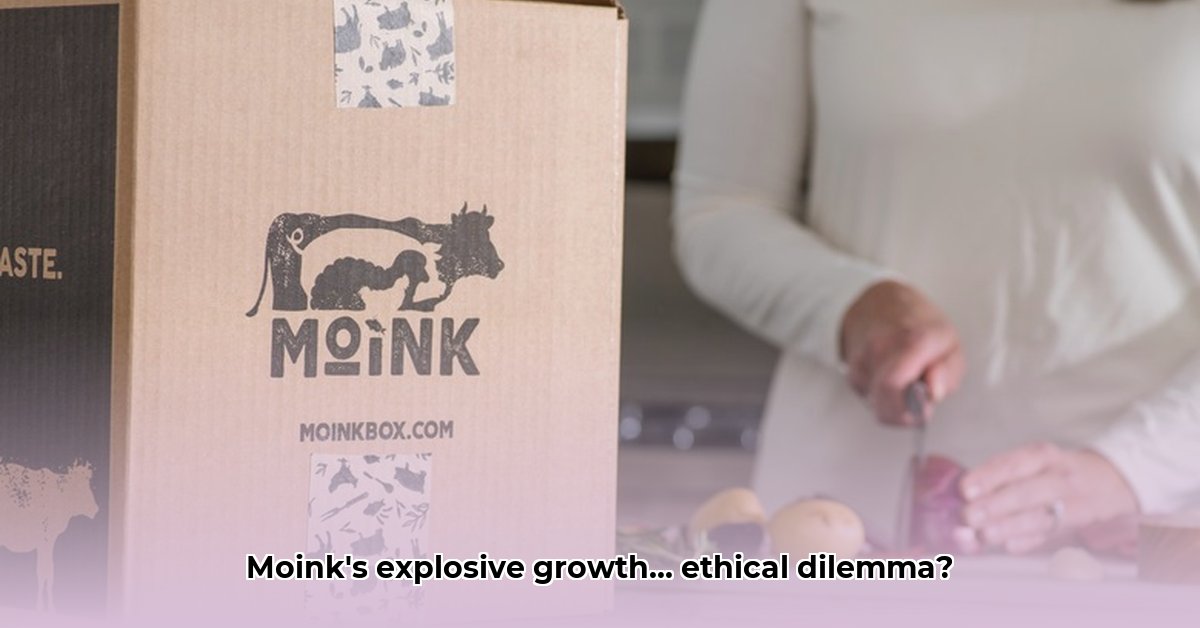
Moink's Ascent: From Startup to Sustainable Meat Powerhouse
Moink, a subscription-based meat delivery service, has rapidly gained traction by prioritizing ethically sourced, humanely raised meat. This case study analyzes Moink's financial performance, strategic decisions, and the inherent challenges of balancing profitability with unwavering ethical commitments within the rapidly evolving sustainable food market. While precise net worth figures remain undisclosed, available data points to a multi-million dollar valuation in 2024, showcasing remarkable growth. But how sustainable is this growth model? And what challenges lie ahead for Moink and the broader ethical meat industry?
Financial Performance: A Tale of Growth and Profitability
Moink's financial performance is a compelling narrative of rapid expansion alongside persistent challenges. Reports suggest annual revenue exceeding $10 million in 2024, indicating significant market penetration. A key strength lies in its impressive customer retention rate, consistently above 70%, demonstrating strong customer loyalty and the effectiveness of its subscription model. This recurring revenue stream mitigates reliance on constant customer acquisition. However, the high customer acquisition cost (CAC) of approximately $97 per customer poses a persistent hurdle to consistent profitability. Maintaining this growth trajectory while achieving consistent profitability will require a nuanced approach to cost management and operational efficiency, particularly given the premium pricing structure needed to support ethical sourcing practices. Does the current business model allow for sufficient profit margins to sustain the growth, or does it necessitate a strategic shift?
Strategic Analysis: A Multi-pronged Approach
Moink's strategic approach has been instrumental in its success. High-profile partnerships, notably with entrepreneur Jamie Siminoff, enhanced brand visibility and credibility. Targeted marketing campaigns effectively reached environmentally conscious consumers, a key demographic for their value proposition. Efficient supply chain management, coordinating with numerous smaller family farms, is crucial to ensuring consistent product quality and supply. However, maintaining these relationships and scaling production while adhering to strict ethical standards represents a considerable ongoing challenge. Will they maintain quality and ethical sourcing as they scale? The long-term viability significantly hinges on the answer.
Ethical Sourcing: The Core of Moink's Value Proposition
Moink's commitment to ethical sourcing is a defining element of its brand identity. Their partnership with family farms that prioritize humane animal welfare practices is a key differentiator. However, this commitment comes at a cost. Ethically produced meat typically commands higher prices, creating a balancing act between competitive pricing and maintaining profitability. Scaling operations while adhering to these high ethical standards is a significant ongoing challenge. Can Moink maintain its commitment to smaller farms and ethical sourcing at scale, or will compromises be necessary to meet the increasingly growing market?
SWOT Analysis: Strengths, Weaknesses, Opportunities, and Threats
A comprehensive SWOT analysis reveals the current positioning of Moink:
| Strengths | Weaknesses | Opportunities | Threats |
|---|---|---|---|
| Strong brand reputation; high customer loyalty | High customer acquisition cost; profitability challenges | Expanding product lines; entering new geographic markets | Increased competition; supply chain disruptions |
| Ethical sourcing; commitment to sustainability | Scalability challenges; maintaining ethical sourcing at scale | Strategic partnerships; leveraging brand recognition | Fluctuations in consumer preferences; regulatory changes |
Conclusion: Navigating the Future of Ethical Meat
Moink's future net worth depends on its ability to navigate a complex interplay of factors. Improving operational efficiency, refining pricing strategies, and potentially diversifying its product offerings are crucial strategic steps. Maintaining its commitment to ethical sourcing remains paramount and is directly linked to long-term customer loyalty. The growing market for ethically produced food presents significant opportunities. However, increased competition, potential supply chain disruptions, and fluctuating consumer preferences pose challenges. Moink's ability to maintain its ethical standards whilst achieving profitability will ultimately determine its long-term success and influence the trajectory of the broader ethical meat industry. The coming years will be pivotal in defining Moink's future and testing its ability to reconcile explosive growth with its core ethical values.